Bondage
Don't Leave God Alone: How to Get God's Attention, Remain in His Presence, and Even Change His Mind to Make a Difference in Your WorldBondage is described as a condition in which a person is held in a cell of defeat, oppression, torment, or recurring sin, sometimes openly and sometimes where no one else can see it. Its decisive significance in the book is that captivity is not treated as an irreversible identity: the person who turns toward God, refuses to accept confinement, and persists in repentance and worship can move toward deliverance.
Definition and Spiritual Imagery
The book portrays bondage through the image of a dark prison cell. People may be cruelly confined, burdened, isolated, and unable to find help, yet their desperate cry to God can lead to release. Psalm 107:10-16 is invoked as a picture of God breaking jailhouse doors and snapping prison bars, while Psalm 126:1 is used to express the promise that captivity can be turned, whether it is hidden or outward and obvious.
The condition is also described through the phrase “prison spirits.” These are said to keep people in a cell of defeat, bondage, oppression, and torment. The imagery makes bondage more than a momentary temptation or ordinary hardship: it is represented as an enclosing power that repeatedly restricts a person’s freedom and makes escape seem impossible. At the same time, the prison metaphor preserves the possibility of an opened door. A cell implies confinement, but it also implies that confinement can be broken.
Causes and Forms of Captivity
The book connects bondage with several possible forms of enslavement. A person may be wrongfully bound to another person, but the supposed jailer may also be a sin habit, a demonic stronghold, a generational curse, or a private sin. These forces are presented as instruments through which the devil keeps people from becoming free. The account therefore distinguishes between the visible behavior that others may recognize and the deeper power believed to sustain it.
The prison scene of Peter supplies the governing analogy. Peter was kept in prison between two soldiers, bound with two chains, while guards stood at the door. Although those soldiers and guards were actual people, the book reads them metaphorically as a picture of spiritual jailers that bind individuals. One chain represents inward, hidden bondage that is difficult for others to detect; the other represents outward bondage that everyone knows about. The distinction gives the state a double aspect: captivity can be concealed within a person’s thoughts, desires, or private conduct, or it can appear in a pattern that has become publicly evident.
Bondage is also associated with shame and withdrawal from God. After Adam and Eve sinned, they moved from being unashamed to feeling exposed and embarrassed. They sewed fig leaves together as a covering, and the covering came to stand between them and God’s presence. The book uses the fig leaf as an image of self-made righteousness: people who have failed may hide behind excuses, personal effort, or outward justifications rather than approaching God honestly. Such coverings do not remove the underlying condition; they merely make separation feel safer.
The First Movement Toward Freedom
The proposed answer to bondage begins with refusing to run away from God. When people feel that they have failed or have left God alone, the instruction is to run straight back to Him instead of hiding. The blood of Jesus is presented as the true covering, replacing the fig leaf of personal works and allowing the person to return without depending on self-produced righteousness.
This return is not described as a single emotional apology detached from conduct. The book distinguishes repeated sorrow from repentance that changes direction. Hank Kunneman recounts struggling with an attitude toward another believer and repeatedly telling God that he was sorry, while still attempting to change on his own terms. He understood the difference only after the conviction became unbearable: an apology can acknowledge distress without establishing a permanent intention to change, whereas repentance rejects the sin and turns the person in another direction.
The pattern of release therefore combines mercy with continued action. John the Baptist’s call to bring forth fruits suitable for repentance is interpreted through the principle of sowing: lasting fruit begins with seeds. Daily decisions involving right living, right thinking, right attitudes, and right choices gradually produce a changed life. Even when a person fails and must return to God again, the repeated choice to sow righteousness is treated as part of the process by which bondage loses its hold.
Praise, Worship, and the Breaking of Chains
The book identifies praise and worship as the beginning of freedom from a jailer spirit. Worship places God above the person’s failures and sins, shifting attention away from the apparent permanence of captivity and toward the Lord’s power to deliver. Its force is especially emphasized when the captive feels pain, shame, or defeat, because praise in such circumstances represents a deliberate refusal to let bondage define the highest reality.
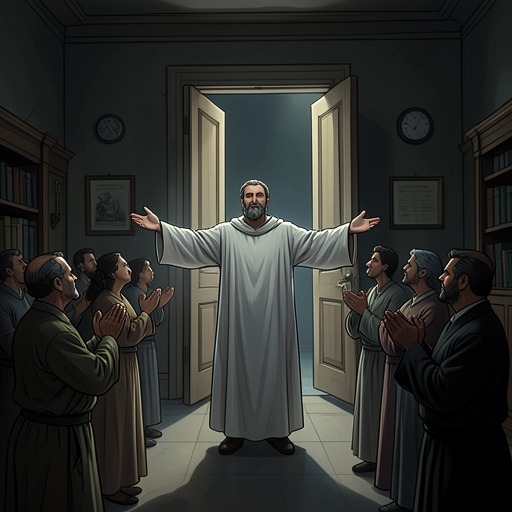
The example of Paul and Silas gives this teaching its clearest dramatic form. At midnight, in their darkest hour, they prayed and sang praises to God while the other prisoners listened. A great earthquake shook the foundations of the prison; the doors opened, and everyone’s chains came loose. Their freedom came while they were still inside the prison, before the circumstances had visibly changed, making worship itself the act that refused surrender to confinement. The book concludes that they would not have experienced that freedom if they had left God alone in worship.
Repentance, Persistence, and the Refusal of Captivity
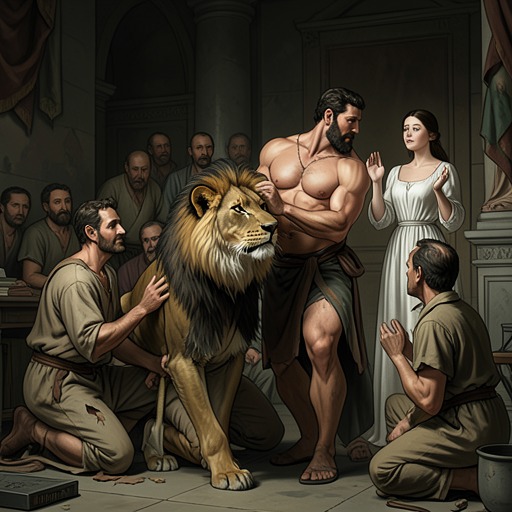
The same principle appears in the account of Samson, whose bondage was inseparable from the consequences of his own wrongdoing. The Philistines placed him between two pillars and mocked him, turning his weakness into a public spectacle. Yet Samson did not accept humiliation as the final definition of his life. He asked a young boy to help him lean against the pillars, and then, receiving supernatural strength again, pushed them down. The house collapsed, killing those inside, including Samson; nevertheless, the account records that he killed more at his death than during his life. His final act is interpreted as evidence that God honored his repentance and his desire to make amends. In this reading, deliverance does not erase the seriousness of prior failure, but it can transform the last movement of a ruined life into an act that tears down the strongholds responsible for its captivity.
The image of Samson’s two pillars extends the earlier image of Peter’s two chains. Bondage may have an inward dimension that remains hidden and an outward dimension that has become visible, but both can function as supports for the same oppressive structure. Samson’s deliverance therefore requires contact with the pillars themselves: the captive must confront what has been holding the structure upright rather than merely lamenting its effects. His story encourages those who have failed badly to persist in repentance and to continue seeking freedom instead of concluding that their previous choices have made restoration impossible.
The Temptation to Remain Bound
The book also acknowledges a disturbing contradiction: some people want deliverance from the pain of bondage without wanting to surrender the stronghold that produces it. They possess power, in the book’s theological framework, to cast the devil out of their own lives and the lives of others, yet they may prefer the familiarity of their captivity. The phrase “one more day with the frogs” names this postponement. It describes the decision to tolerate a demonic stronghold for another day because the discomfort of change seems greater than the suffering already caused by bondage.
This reluctance makes captivity self-perpetuating. The person recognizes the pain, but treats the source as something to be negotiated with rather than removed. The frog image gives that compromise a deliberately ordinary rhythm: not permanent allegiance in a single dramatic declaration, but another delay, followed by another day in the same oppressive environment. Against that pattern, the book places the urgency of refusal. Freedom requires more than acknowledging that bondage hurts; it requires choosing not to preserve the conditions that sustain it.
Mercy, Discipline, and the Shape of Freedom
Bondage is thus framed by a tension between immediate mercy and daily discipline. The fallen person is told not to hide from God, because forgiveness remains available through Jesus. Yet forgiveness is not presented as permission to remain unchanged. The person must cultivate a life that repeatedly chooses righteousness, returns in repentance after failure, and refuses the private or public chains that once governed conduct. The movement is neither self-justification through fig leaves nor passive waiting for circumstances to improve. It is a sustained return to God joined to concrete changes in thought, attitude, behavior, and worship.
The book’s teaching on money illustrates the same moral structure. Money itself is not treated as evil; the danger lies in loving it, trusting it, or allowing it to replace God as the heart’s first passion. The stated principles are that people must not be arrogant about wealth, must not put their trust in it, may enjoy it, must use it for good, and must give generously. Financial blessing is therefore compatible with faith only when possession does not become another form of captivity. The issue is not simply what a person owns, but whether wealth has become a jailer that displaces God and redirects the person’s desires.
Prayer provides the relational setting in which this struggle is carried forward. In teaching the disciples to pray, Jesus begins with “Our Father,” establishing personal relationship, and then directs worship toward the hallowing of God’s name. The prayer places God’s kingdom and will above individual plans, asks for daily provision, and joins forgiveness received to forgiveness extended to others. It finally asks for deliverance from evil. Failure is not treated as a reason to remain separated: like Adam and Eve, people may be tempted to hide, but the prescribed response is to ask for forgiveness and return with confidence. A forgiving heart toward others is presented as part of the condition that enables this return and strengthens resistance to temptation.
Bondage and Persistent Prayer
The final defense against captivity is persistence. Jesus’ teaching on importunity presents prayer as shameless, bold, determined, pressing, entreating, and persistent; the aim is to form people who do not give up. This persistence does not deny the reality of chains, jailers, shame, or repeated failure. Instead, it refuses to treat any of them as a sufficient reason to leave God alone. Bondage may be hidden or publicly recognized, rooted in habit or stronghold, and reinforced by shame or postponement, but the book consistently directs the captive toward the same pattern: return to God, repent with the intention to change, sow righteousness through daily choices, praise in the darkest hour, and keep asking until deliverance becomes visible.